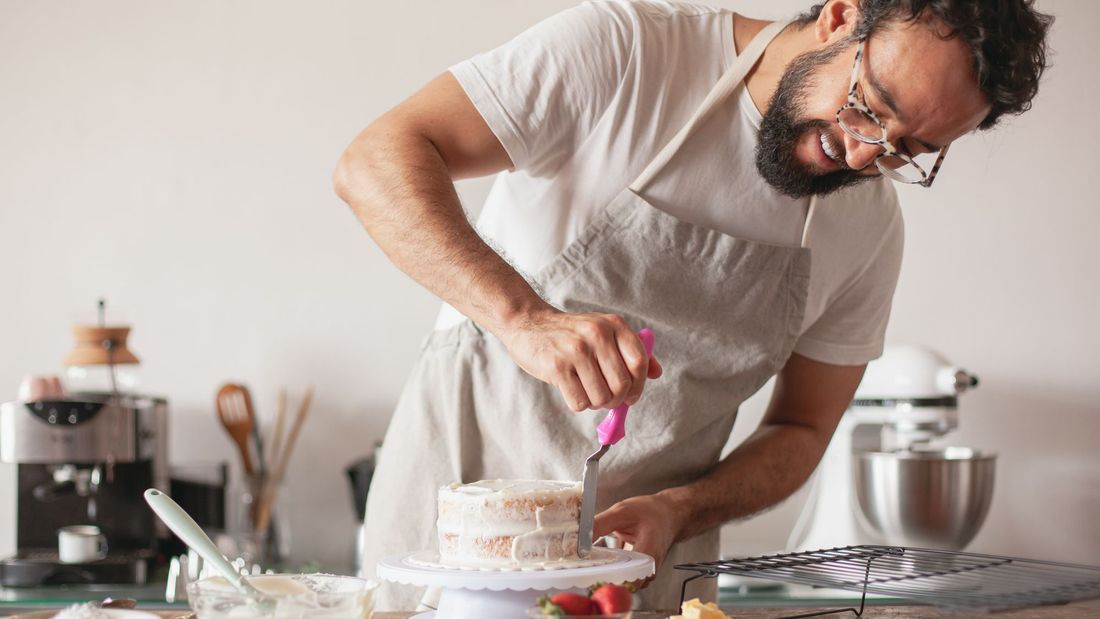
Good news if you bake: for most home cake makers, the paperwork wall came down in late 2025. Since 31 October 2025, home-based makers and decorators of shelf-stable cakes don’t need to register a food control plan or national programme. The catch is that the cakes must be made in a home kitchen and sold direct to the consumer. Add cookies, cheesecake or a café order and you’re back in registration land.
That’s the short version. Here’s the full picture for anyone turning birthday-cake orders into an actual business, plus the moment you’ll probably outgrow the exemption and what it costs to level up.
What actually changed for home cake makers?
Before the change, a home baker selling cakes had to register a food control plan, and a home decorator had to register under National Programme 2. That meant fees, a verifier visiting your kitchen, and a lot of admin for someone selling a few dozen cakes a month.
New Zealand Food Safety consulted on scrapping that for low-risk cake work in 2025, then issued a class exemption under section 33 of the Food Act 2014. The notice came into force on 31 October 2025 and expires on 31 October 2028 (MPI: proposed exemption for home-based cake makers and decorators).
Two groups are covered:
- home-based cake makers of shelf-stable cakes made in a home kitchen and sold direct to consumers;
- home-based decorators of shelf-stable cakes, on the same terms.
No registration also means no verification visits, no registration fee and no annual food business levy for that work. That last bit adds up: MPI’s levy is $99.19 a site (GST included) from 1 July 2026, climbing to $132.25 from 1 July 2027 (MPI: Food Act fees and charges).
Does your cake count as “shelf-stable”?
This is the question that decides everything. The notice defines a shelf-stable cake as one that’s safe to eat, including its filling and decoration, when stored at room temperature until it’s eaten, or one meant to be eaten within three to five days that doesn’t need refrigeration in that time to stay safe.
A quick self-test:
- Would you happily leave it on the bench overnight? Classic butter cakes, banana loaf, fruit cake, brownies and most iced celebration cakes usually pass.
- Does any part of it need the fridge to be safe? Fresh cream, custard-style fillings and fresh-fruit toppings that need chilling are the usual problems.
- Are you guessing? If you can’t say confidently, treat it as outside the exemption until you’ve checked.
What counts as a “cake” matters too. Council guidance drawing on MPI’s position treats cupcakes, brownies, muffins, panettone, panforte and doughnuts as cake. Cookies, biscuits, cheesecake, macarons, cinnamon rolls and rusks are not (Kaipara District Council: home-based cake makers).
Here’s the part people miss. The exemption doesn’t cover your other products. If your Insta shop sells cakes and cookie boxes, the cookies need a registration, and that pulls your business back under the normal rules anyway.
Where can you sell, and who can you sell to?
The heart of the exemption is direct to consumer. The notice also says operators must use their “best endeavours” not to sell to anyone for resale, and not to sell for export.
| Selling route | Fits the exemption? |
|---|---|
| Custom birthday or wedding cake ordered by the customer | Yes, if shelf-stable |
| Orders through your own website, Instagram or Facebook | Generally yes, the buyer is the end customer |
| Weekend market stall, selling to shoppers | Likely, but check with your council |
| Supplying a café, deli or coffee cart to sell on | No |
| Selling to a reseller or gift-box company | No |
| Posting cakes overseas | No |
That café line is the one that bites. Wholesale is often where a cake business grows up, and it’s the exact point the exemption stops.
Exempt doesn’t mean rule-free
Skipping registration isn’t a free pass. Exempt businesses still have to make food that’s safe and suitable, tell MPI if a product is likely to pose an immediate threat to people’s health, and be able to recall something unsafe. In practice that means:
- Know your allergens and tell people. Celebration cakes often go to kids’ parties. Keep a simple ingredient list for every cake you sell.
- Keep a basic order log. Who bought what, when, and which batch of ingredients you used. If something goes wrong, that’s your recall plan.
- Separate business and family food where you can, and keep pets out of the kitchen while you bake.
- Check your other obligations. The exemption is about food registration only. Your district plan, your tenancy agreement and your insurance may have their own say on running a business from home.
Cake side hustle: the money stuff
Cakes sold for profit are income, so they go in your tax return. Many home bakers start as sole traders because it’s simple, and our guide to choosing between sole trader and company is worth reading before orders really pick up.
GST kicks in when taxable sales go over $60,000 in a rolling 12 months, or you expect them to (Inland Revenue: registering for GST). Wedding season can push a busy maker there faster than expected. See our GST threshold guide for how the forward-looking test works.
And price properly. Plenty of home bakers charge for ingredients and forget their time, power, packaging and boxes. If a three-tier cake takes eight hours, the price should say so.
Thinking about kit, a van or a kitchen? See what you could qualify for in 60 seconds, with no credit check to start.
When do you outgrow the home-kitchen exemption?
Usually one of these happens:
- A café asks to stock your cakes. That’s resale, so you need a registration.
- You add cookies, slices or cheesecake. Popular products, outside the exemption.
- The volume gets silly. There’s no cap on the number of cakes, but there is a cap on how many trays fit in a home oven.
- You want a shopfront or a market trailer. A pop-up or permanent spot changes the rules again.
- 2028 gets closer. The exemption has an end date. MPI could extend it or replace it, but don’t build a business plan that only works if it does.
When you register, the cost depends on your plan and your council. MPI’s own schedule shows $194.06 (GST included) to register a template food control plan through MPI. Councils set their own fees, plus verification costs and the annual levy.
The bigger bill is the gear and the space: a commercial oven, a planetary mixer, chillers, stainless benches, packaging stock, perhaps a lease on a small unit or regular hire of a shared commercial kitchen. That’s when funding enters the chat.
Worked example: from Saturday orders to café supply
Illustrative example only. Not a real business.
Mere bakes celebration cakes from her Hamilton home. She’s been selling for 11 months through Instagram, about 25 cakes a week, all shelf-stable buttercream designs. Under the exemption she hasn’t needed to register.
Then two cafés ask for a weekly order of loaf cakes and brownies, and a gift-box company wants cookie tins for Christmas. All three mean registering, and her home oven can’t keep up anyway.
Her plan:
- Space: lease a small unit with an existing commercial kitchen, about $1,900 a month.
- Gear: a deck oven, a 20-litre mixer, an upright chiller and benches, about $38,000 with installation.
- Registration: a template food control plan through her council, plus verification.
- Working capital: packaging, ingredients and two months’ rent while the café orders ramp up, about $12,000.
Mere has nearly a year of steady deposits into a business account, so an unsecured loan for the equipment and a small line of credit for stock might fit. If she’d only been trading three months, a loan secured on property she or a family member owns would be the more likely path. Either way, the café income has to cover repayments before she signs anything, so she prices her wholesale cakes at a margin she can live with, not a mates’ rate.
How do you fund the jump to a commercial kitchen?
Lenders mostly want to know three things: how long you’ve been trading, what your bank statements look like, and what the money is for.
- Trading around six months or more with regular deposits? Unsecured funding may work, sometimes with a same-day decision.
- Newer than that, or need a bigger amount? Loans of $20,000 to $1m secured on NZ property can be considered from day one.
- Mostly gear? Our equipment and tech funding page covers buying versus leasing and Investment Boost on new assets.
- Opening a counter or kiosk? See café and food truck loans.
Run every customer payment through one business account, even the cash at markets. Lenders can’t count money they can’t see. If you’re still deciding whether to go full time, our side-hustle-to-full-time guide helps with the timing.
Ready to bake bigger?
Most cake businesses start the same way: one great recipe, a few friends’ birthdays, then a waiting list. The exemption makes the first stage easier than it’s ever been. The next stage, with cafés, a proper kitchen and a bigger range, takes some capital. That’s the bit we help Kiwi founders with every week.
Here’s what to expect when you reach out:
- Filling in the enquiry is roughly a 60-second job, and your first enquiry comes with no credit check.
- We don’t fire your details off to a pile of lenders. No spray and pray, and no surprise calls from companies you’ve never heard of.
- A real person looks at your bakery’s numbers, your plans and your timing, then calls you to talk it through.
- Please fill the form in accurately, including your real turnover and how long you’ve been trading, so we can line up the right option first time.